UCF

WATER TREATMENT and HEALTH RESEARCH

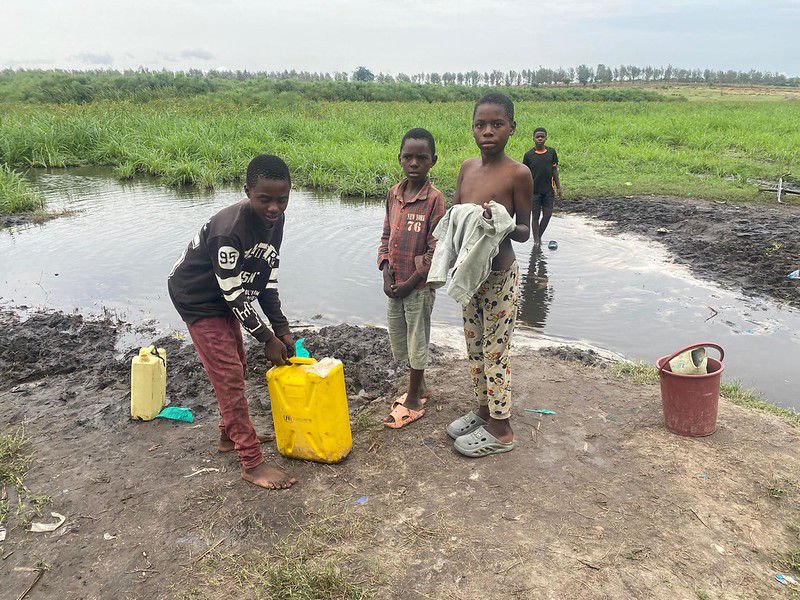
The refugees of nakivale have to contend with a high level of water borne disease such as cholera due to accessing contaminated water from Lake Nakivale and even large puddles after rainfall.

With our fabulous consultants in Wales, and in collaboration with UNHCR and Uganda national water supplier, Nsamizi, UCF is building their first water filtration and purification plants to deliver clean water to refugee households. 

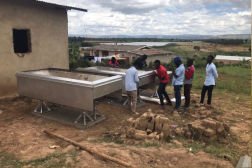
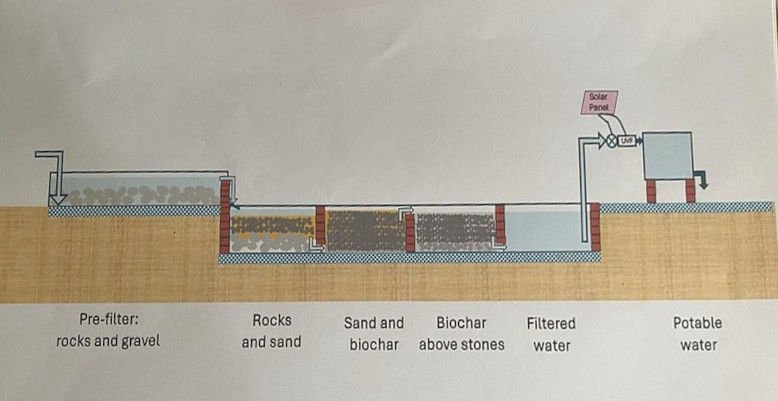
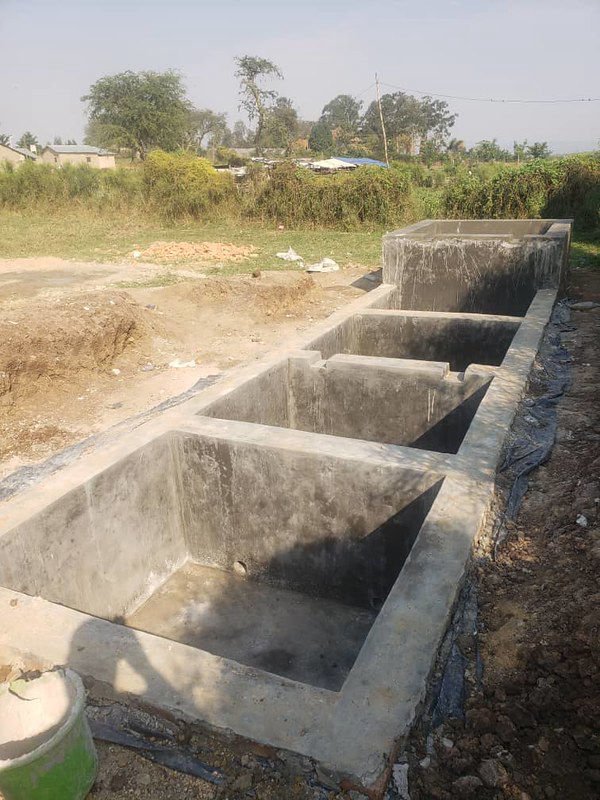
The prototype is designed by our biochar consultants in Wales including researcher in biochar, Prof Lionel Clarke. See images and video below. The prototype  has proved very successful and the water from the plant is tested by the Ugandan Government Pathology Laboratories as having zero pathogens. Test results. This is great news and the team in Wales (as of May 2026) have decided to fund two further filtration plants. Each plant as in the image below will provide a 20L jerry can of water to 500 households every day.

While a few additional infrastructure upgrades are still required to house the distribution outlet,  prevent direct environmental contamination, and provide a community access point, UCF expects to have the plant upgraded to distribution capabilities by July 2026.

Water Treatment Test Sampling

Water from a dam is sent through a four phase filtration including rocks, gravel, sand, biochar (see design image above). The filtered water is final treated through an ultraviolet pipe that kills all persistent e-coli and cholera bacteria.

HEALTH RESEARCH

Our research team, Dr Desire Uzele (Refugee Medic), Dr Roslyn Phillips (Public Health, USA & Haiti), Dr Japhet Nayituriki (Disease Specialist, Rwanda) have designed a health survey of the community. Dr Desire has prepared a team of 25 workers to survey the immediate beneficiary community about water borne hygiene and health issues.
This initial survey will give us a baseline of health and disease issues before the community has access to the new clean water.
Follow up surveys will be conducted at 6 months after the community has access to the clean water. The comparison will provide us information about how effective the plant and distribution has been in controlling water borne disease. This is going to be valuable in supporting the rollout of further plants. 

Kate White

Lorem ipsum dolor sit amet, consectetur adipisicing elit. Aut soluta eaque labore facere ullam inventore maiores ex nemo explicabo accusamus, culpa voluptates molestiae nihil corporis, voluptatum sint fugiat cupiditate alias.

Daniel Grey

Lorem ipsum dolor sit amet, consectetur adipisicing elit. Aut soluta eaque labore facere ullam inventore maiores ex nemo explicabo accusamus, culpa voluptates molestiae nihil corporis, voluptatum sint fugiat cupiditate alias.

Anna Green

Lorem ipsum dolor sit amet, consectetur adipisicing elit. Aut soluta eaque labore facere ullam inventore maiores ex nemo explicabo accusamus, culpa voluptates molestiae nihil corporis, voluptatum sint fugiat cupiditate alias.

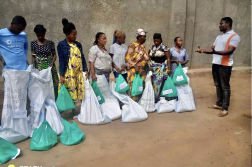
Health Survey team training